

BC Asphalt Plant Emissions Testing Requirements
- kevin0142
- 3 days ago
- 4 min read
For asphalt producers, BC Asphalt Plant Emissions Testing Requirements are not defined by a single province-wide testing schedule. The enforceable requirements are typically established through the facility’s site-specific authorization, permit, approval, or local air-quality authorization. That distinction matters: a test program that is technically sound but does not follow the applicable permit condition, reference method, operating-load requirement, or reporting format may still fail to demonstrate compliance.
Start With the Facility Authorization
The first step is to review the current operating authorization and every condition related to air emissions. In British Columbia, requirements may be administered under provincial environmental legislation, regional air-quality programs, or local government authorities, depending on the facility location and regulatory structure.
An authorization may specify the emission points to be tested, pollutants of concern, frequency, production conditions, sampling methods, notification periods, and submission deadlines. It may also establish maximum discharge limits for particulate matter, nitrogen oxides, sulfur dioxide, carbon monoxide, volatile organic compounds, or other parameters relevant to the plant configuration and fuel used.
Testing obligations often apply to the aggregate dryer and burner exhaust stream, where combustion emissions and process particulate are combined. Depending on the equipment and authorization, requirements may also address baghouse outlets, hot-mix loadout areas, storage tanks, or fugitive dust sources. A permit should be read alongside any approved operating plan, historical compliance correspondence, and previous source-test reports. These documents often clarify expectations that are not obvious from a single permit clause.
When Asphalt Plant Testing Is Required
Source testing may be required on a recurring schedule, after commissioning a new plant, following a major equipment change, or when an authorization is renewed or amended. A regulator may also require testing after an exceedance, visible-emissions concern, complaint investigation, control-device failure, or material change in fuel, feedstock, production capacity, or operating configuration.
The required interval is site-specific. It is not safe to assume that a testing frequency used at another asphalt facility applies to your operation. Seasonal production also creates a practical issue: the plant must be tested at representative, permit-compliant operating conditions. A low-production run conducted outside the specified load range may not satisfy the requirement, even when measured concentrations appear favorable.
Before mobilizing a testing crew, confirm the production rate, recycled asphalt pavement percentage, moisture content of aggregate, burner fuel, dryer configuration, baghouse status, and any warm-mix additives being used. Each can affect exhaust flow, oxygen content, combustion emissions, and particulate performance.
Methods, Sampling Locations, and Operating Conditions
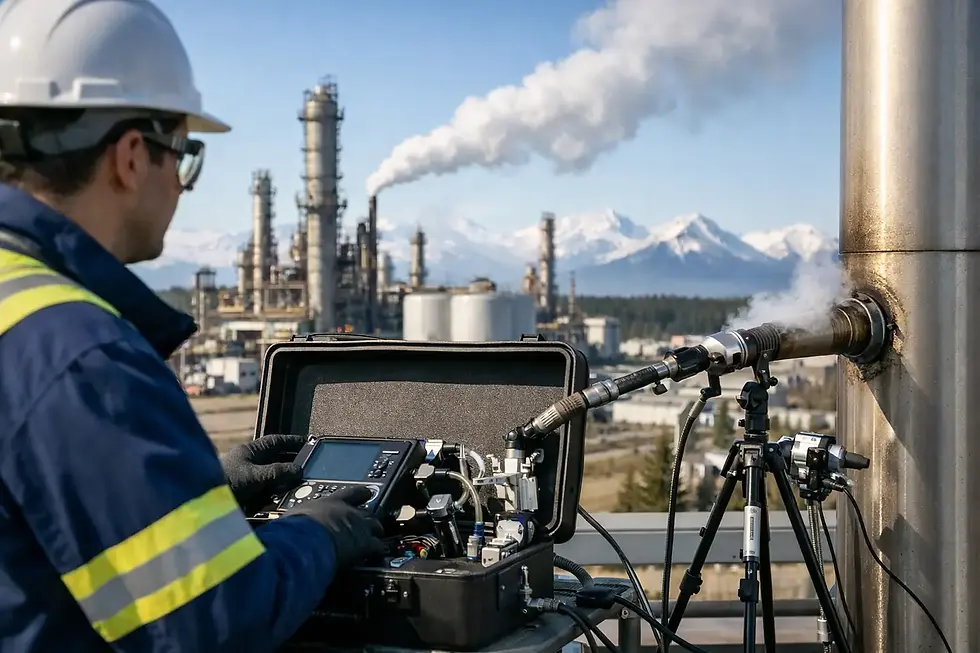
The governing authorization should identify the required reference methods or allow the regulator to approve a method plan in advance. Common source-test programs may include measurement of stack gas velocity and volumetric flow, moisture, oxygen or carbon dioxide, particulate matter, and combustion gases. Where applicable, testing may use established EPA reference methods for traverse location, flow determination, gas analysis, particulate sampling, and visible emissions.
Method selection is only one part of defensible testing. The sampling location must be suitable for representative measurement. Poor access, inadequate ports, disturbed flow, short straight-run ductwork, leaks, or unsafe roof access can compromise data quality and delay the test program.
A pre-test site assessment should verify that the stack has compliant access, properly sized ports, safe platforms, electrical service where required, and sufficient clearance for sampling equipment. It should also confirm whether the test can be performed while the plant operates at the required production rate without creating unacceptable safety or operational risk.
Documentation Is Part of Compliance
A complete emissions test report should do more than present final concentrations. Regulators and internal compliance teams need a clear record of how the test was performed and whether the results represent normal operation.
The report should document the authorization requirements, sampling methods, calibration records, field data, laboratory results where applicable, process operating data, production rate, fuel information, control-device conditions, calculations, quality-assurance checks, and any deviations from the approved plan. Results may need to be reported in specific units and corrected to reference oxygen, temperature, pressure, dry gas conditions, or another permit-defined basis.
For an asphalt plant, operating data are especially important. A particulate result cannot be interpreted properly without understanding baghouse pressure drop, cleaning cycle status, fan operation, aggregate moisture, burner firing rate, and plant throughput during each run. If these conditions are not recorded, the report may be difficult to defend during a regulatory review.
Prepare Before the Compliance Deadline
Testing failures are often caused by planning gaps rather than poor emissions performance. A test date can be lost because the plant cannot sustain the required throughput, the stack lacks safe access, calibration gases were not verified, or the baghouse is operating outside normal conditions. Rescheduling may be costly, particularly during a constrained paving season.
A disciplined pre-test plan should establish the regulatory objective, required methods, target operating range, safety controls, site-access requirements, responsible personnel, and reporting deadline. It should also identify what will happen if a run is invalid, the plant cannot meet the required load, or a result approaches an emission limit.
For facilities operating in British Columbia, early review of permit conditions and a technically complete test plan provide the strongest foundation for reliable emissions data. That preparation gives plant and EHS teams time to correct access issues, confirm control-device performance, and complete testing under conditions that accurately represent the operation.

Comments