

Grand Prairie Stack Emission Testing Requirements
- kevin0142
- 4 days ago
- 4 min read
A stack test that produces accurate readings but misses an approval deadline, required operating load, or prescribed method can still fail its compliance purpose. For facilities searching for Stack Emission Testing Grand Prairie Requirements, the first step is to identify the governing approval and the jurisdiction that applies to the source.
In Alberta, the community is generally spelled Grande Prairie. Stack emission testing requirements for industrial facilities in the area are not typically set by one municipal testing rule. They are usually established through Alberta Environmental Protection and Enhancement Act approvals, applicable codes of practice, federal requirements, and, for certain energy operations, regulator-specific conditions. The approval document is the controlling record.
What drives stack testing requirements in Grande Prairie?
Testing obligations vary by facility type, emission source, fuel, production rate, and permit history. A boiler, heater, stationary engine, cement process, thermal oxidizer, or manufacturing exhaust system may each have different pollutants, test frequencies, and operating requirements.
An environmental approval may specify maximum concentrations, mass emission limits, annual testing intervals, notification periods, and reporting deadlines. It may also require source testing after construction, following a significant modification, or when a regulator requests confirmation of emissions performance. Do not assume a prior test program remains acceptable after a burner change, fuel conversion, capacity increase, ductwork revision, or control-device modification.
Common test parameters can include particulate matter, nitrogen oxides, sulfur dioxide, carbon monoxide, volatile organic compounds, hydrogen chloride, ammonia, metals, dioxins and furans, or greenhouse gas-related combustion measurements. The applicable parameters must come from the approval, code, or reporting program, not from a generic test package.
Review approval conditions before scheduling field work
A disciplined pre-test review prevents avoidable invalidation of results. Before mobilization, the facility should confirm the emission units covered, the pollutants to be measured, the required test frequency, and whether the work must be witnessed or pre-approved by a regulator.
Operating conditions deserve the same attention as the sampling method. Many approvals require testing at representative maximum normal production, a stated percentage of rated capacity, or stable operating conditions. Testing during startup, shutdown, low load, abnormal combustion, or control-device upset may not demonstrate compliance unless those conditions are specifically required or accepted.
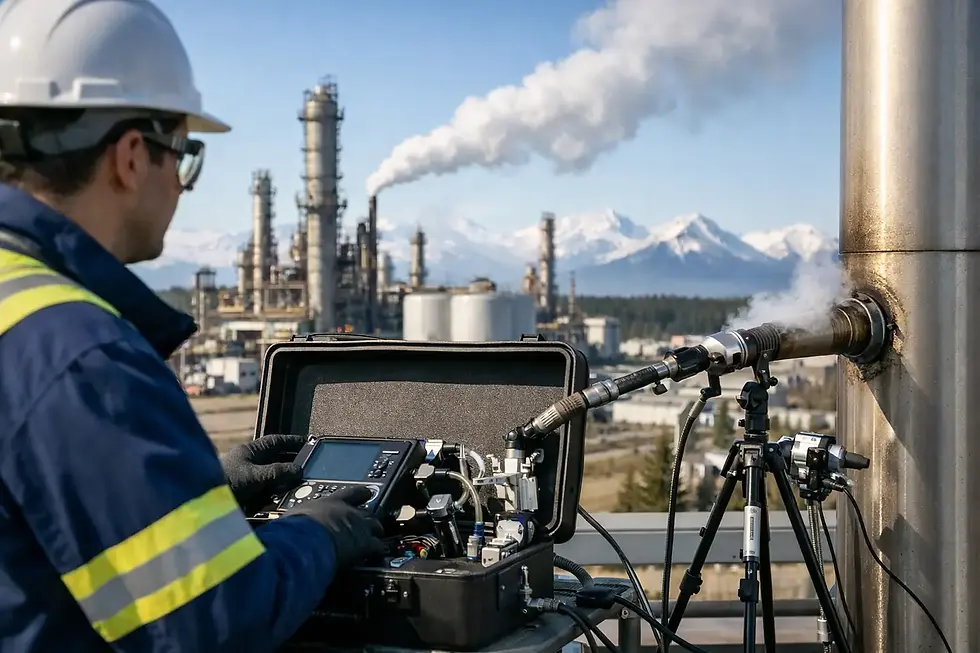
The test plan should also verify stack access, sampling port configuration, platform safety, electrical supply, process data availability, and safe isolation requirements. Inadequate ports, poor access, or an unrepresentative sampling location can create technical limitations that must be addressed before the scheduled test date.
Methods must match the regulatory objective
Alberta requirements and approval conditions may reference recognized source-testing procedures, including Alberta stack sampling guidance and U.S. EPA reference methods. Method selection is pollutant-specific. For example, particulate testing, isokinetic sampling, gas flow determination, oxygen and carbon dioxide measurement, and combustion-gas analysis each require appropriate procedures and calibrated equipment.
Method substitutions should never be made for convenience. If a site condition prevents strict application of the prescribed method, document the issue early and obtain direction where required. A technically capable test is not automatically a compliant test if the method, run duration, traverse point selection, or quality-control criteria do not meet the governing requirement.
Notification, testing, and reporting expectations
Approvals often require advance notice before testing. The required notice period, recipient, and format vary, so facilities should confirm these details directly from their approval. Early scheduling also provides time to coordinate production, safety personnel, equipment availability, and any regulator attendance.
During the test, maintain complete field documentation. This includes process rates, fuel characteristics, control-device operating data, calibrations, leak checks, sampling times, laboratory chain of custody, and any deviations from the approved plan. These records support the validity of the final result and make the report defensible during an audit or inspection.
A compliance report should clearly state the applicable limits, test methods, operating conditions, results, conversion calculations, and conclusions. If results exceed a limit or reveal abnormal performance, the facility should assess the cause promptly. Depending on the approval, this may require notification, corrective action, retesting, or a formal response to the regulator.
When federal programs add another layer
Some facilities have obligations beyond provincial approval testing. Combustion units subject to Multi-Sector Air Pollutants Regulations requirements may need continuous emissions monitoring system support, relative accuracy testing, or other specified verification activities. Greenhouse gas reporting, pollutant inventories, and federal reporting thresholds can also rely on accurate stack test data, fuel records, or calculated emissions.
These programs should be coordinated rather than managed as separate tasks. The same operating data, analyzer calibration records, and emissions results may affect permit compliance, annual reporting, and internal emissions management decisions.
Build testing into the compliance calendar
The most effective stack testing programs start months before the field crew arrives. Review upcoming due dates, approval amendments, maintenance outages, fuel changes, and production plans at the beginning of the compliance cycle. This allows the facility to test under representative conditions and correct access or equipment issues without turning a required test into an emergency.
For Grande Prairie facilities, the practical requirement is simple: use the approval as the baseline, apply the specified methods, test under valid operating conditions, and retain complete evidence for every reported result. That approach produces data management can use and regulators can rely on.

Comments