

Incinerator Emissions Testing Explained
- kevin0142
- Jul 9
- 2 min read
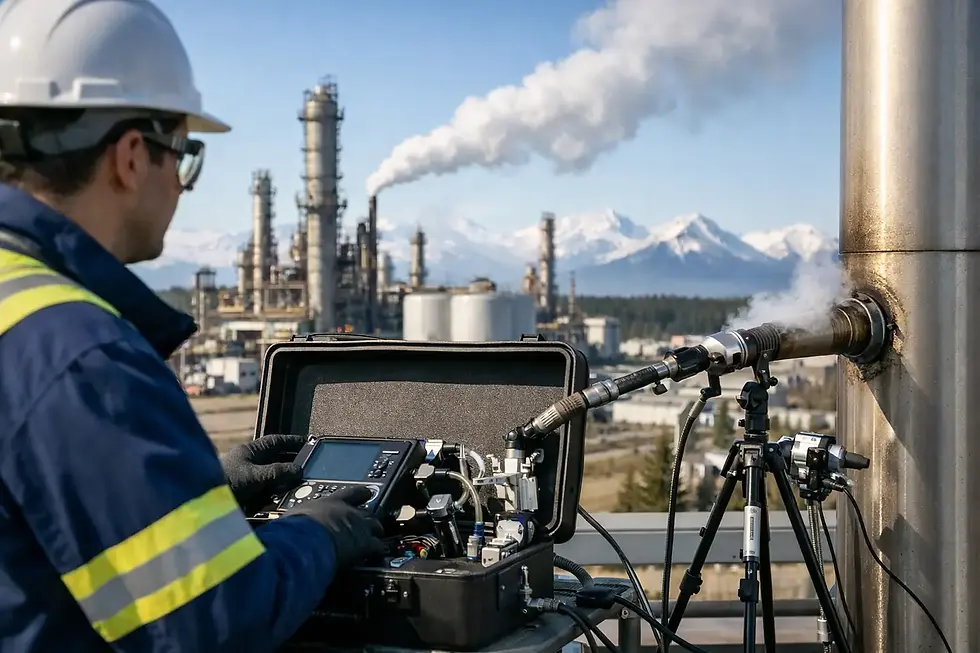
A compliant incinerator is not defined by design intent alone. Incinerator Emissions Testing is what confirms actual performance at the stack, under operating conditions that regulators and facility teams can defend.
Incinerators can produce a wide range of pollutants depending on waste stream, combustion temperature, residence time, and air control performance. Typical testing programs evaluate particulate matter, nitrogen oxides, sulfur dioxide, carbon monoxide, hydrogen chloride, volatile organic compounds, metals, and, where applicable, dioxins and furans. Moisture, oxygen, carbon dioxide, flow rate, and temperature are also measured because they affect normalization, emissions calculations, and permit comparison.
What incinerator emissions testing needs to prove
For most facilities, the purpose is broader than passing a single test day. The data may be used to demonstrate permit compliance, support startup or optimization work, validate destruction efficiency, satisfy reporting obligations, or respond to regulator requests. That means the test plan has to match the actual compliance question. A poorly scoped program can generate valid numbers that still fail to answer what the permit, approval, or reporting framework requires.
Method selection matters. Depending on the source and jurisdiction, testing may involve U.S. EPA reference methods, source-specific protocols, metals trains, isokinetic particulate sampling, or continuous analyzer verification. Operating conditions matter just as much. If the incinerator is not run at representative load, feed rate, and control device settings, the results may not be accepted as representative of normal operations.
Common problems in Incinerator Emissions Testing
The most common failures are not always laboratory failures. They are planning failures. Missing process data, unstable combustion conditions, inaccessible ports, inadequate traverse points, and poor coordination between operations and the field team can compromise a program before sampling begins.
Facilities also run into trouble when they treat stack testing as separate from compliance management. Emissions data must align with permit limits, reporting units, averaging times, and required correction factors. If those details are not addressed upfront, the final report may require rework or additional testing.
Why defensible data matters
Incinerator testing is often scrutinized because the results can affect permit status, public reporting, operating limits, and future capital decisions. Defensible data depends on calibrated equipment, certified personnel, documented chain of custody, method adherence, and clear reporting of deviations and field conditions.
For plant managers and EHS leaders, the practical value goes beyond compliance. High-quality emissions data helps identify combustion instability, confirm control device performance, and support operational decisions with measured evidence rather than assumptions. That is usually the difference between a test that checks a box and a test program that actually reduces risk.

Comments