

LDAR for Tanker Truck Loading Facilities
- kevin0142
- 4 days ago
- 4 min read
A truck-loading rack is one of the few areas in an industrial facility where product transfer connections are routinely made, broken, and exposed to changing pressure conditions. Leak Detection and Repair (LDAR) for Tanker Truck Loading Facilities addresses the fugitive volatile organic compound (VOC) emissions that can occur at these interfaces while supporting worker safety, permit compliance, and reliable loading operations.
For facilities handling gasoline, crude oil, condensate, solvents, or other volatile products, emissions at loading racks are not limited to a single source. Small losses from valves, flanges, hose connections, vapor recovery piping, and loading-arm seals can accumulate over time. A defensible LDAR program identifies those sources, documents their condition, and confirms that repairs have actually reduced emissions.
Why tanker truck loading racks need focused LDAR attention
Loading operations create operating conditions that differ from static process piping. Hoses and arms are moved frequently. Quick-connect fittings are subject to wear. Seals can degrade from product exposure, temperature cycling, vibration, and mechanical damage. Vapor recovery systems may also introduce leak points at connections, valves, pressure-vacuum devices, and control equipment.
The highest-risk components are often the ones that receive the most handling. A connection that appears acceptable during a visual inspection may release vapors only while it is pressurized or while a truck is being disconnected. This is why an LDAR program should be coordinated with actual loading activity wherever safe and practical, rather than relying solely on inspections during idle periods.
Regulatory obligations vary by facility, product, jurisdiction, and permit conditions. Some sites may have specific leak thresholds, monitoring frequencies, recordkeeping requirements, or vapor-control requirements established through approvals, operating permits, or air-quality management plans. Even where a prescriptive LDAR rule does not apply, documented leak management can provide valuable evidence that fugitive VOC sources are being controlled.
LDAR for tanker truck loading facilities: defining the monitoring scope
An effective program begins with a complete and current equipment inventory. The inventory should identify every component included in the monitoring universe, assign a unique identification number, record its service, and show its physical location at the rack or vapor-recovery system.
For a typical loading facility, the scope may include loading-arm swivels, hose assemblies, dry-disconnect couplings, manual and automated valves, flanges, pump seals, sample points, vapor return connections, vapor collection headers, and related pressure-control components. Components outside the formal LDAR inventory should be documented as excluded, along with the reason for exclusion. That distinction prevents gaps in coverage and makes the program easier to audit.
The inventory must also reflect field changes. A new loading lane, replacement hose, modified vapor return line, or upgraded vapor recovery unit can change the source profile. Management-of-change procedures should trigger an LDAR inventory review before the equipment is placed into regular service.
Select a method that matches the compliance objective
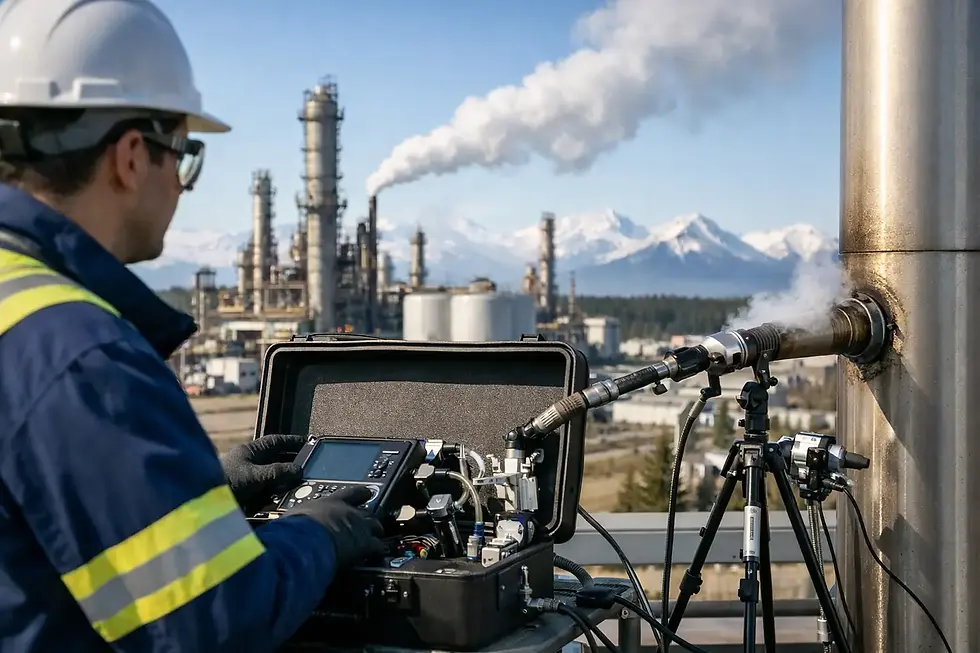
Instrument-based screening is commonly used where a permit, regulation, or internal program requires measured leak detection. Method 21-style monitoring uses a calibrated organic vapor analyzer to screen individual components and compare readings against the applicable action level. The procedure requires trained personnel, appropriate calibration gases, daily instrument checks, documented probe placement, and records that support data quality.
Optical gas imaging can be a useful complementary tool, particularly for identifying intermittent or difficult-to-access vapor releases. It can help locate emissions around loading arms, vapor piping, and elevated components quickly. However, optical imaging does not automatically replace instrument screening when the governing requirement specifies Method 21 or a defined concentration threshold.
Soap solution, audible leak checks, pressure testing, and operator observations also have a role, especially for compressed-gas or non-VOC services. These methods should supplement, not dilute, the documented monitoring approach required for the equipment and service involved.
Repair work must be verifiable, not just recorded
Finding a leak is only the first step. The repair process should identify the component, leak reading or observation, date discovered, likely cause, repair action, and repair completion date. Where a repair cannot be completed immediately, the facility should document the reason, assess interim controls, and establish a tracked completion date consistent with applicable requirements.
At loading racks, repair planning must account for safe isolation, product compatibility, line pressure, truck scheduling, and the availability of replacement parts. Tightening a fitting may resolve a minor issue, but recurring leaks can indicate damaged threads, incompatible seals, misaligned loading arms, worn couplings, or a vapor system operating outside its intended pressure range.
A successful repair should be re-monitored after the component returns to service. This verification distinguishes a completed work order from an emissions-control result. It also helps maintenance teams identify repeat failures that warrant equipment redesign or a revised preventive maintenance interval.
Build records that stand up to review
LDAR documentation should allow an environmental manager, internal auditor, or regulator to reconstruct what happened at each component. Core records generally include the component inventory, monitoring dates, instrument identification and calibration information, screening readings, leak tags, repair history, delay-of-repair justifications, and post-repair verification results.
Trend analysis adds operational value beyond compliance. Repeated leaks on one loading arm, a specific product service, or a particular coupling type may point to a maintenance or design issue. Reviewing this information alongside vapor recovery operating data, loading volumes, and odor or operator reports can reveal problems before they become a larger emissions event.
For facilities in Western Canada managing complex approval conditions and emissions reporting obligations, an LDAR program should be integrated with the broader air compliance plan. Air Research Group can support the measurement, documentation, and technical interpretation needed to turn loading-rack observations into defensible emissions-control decisions.

Comments