
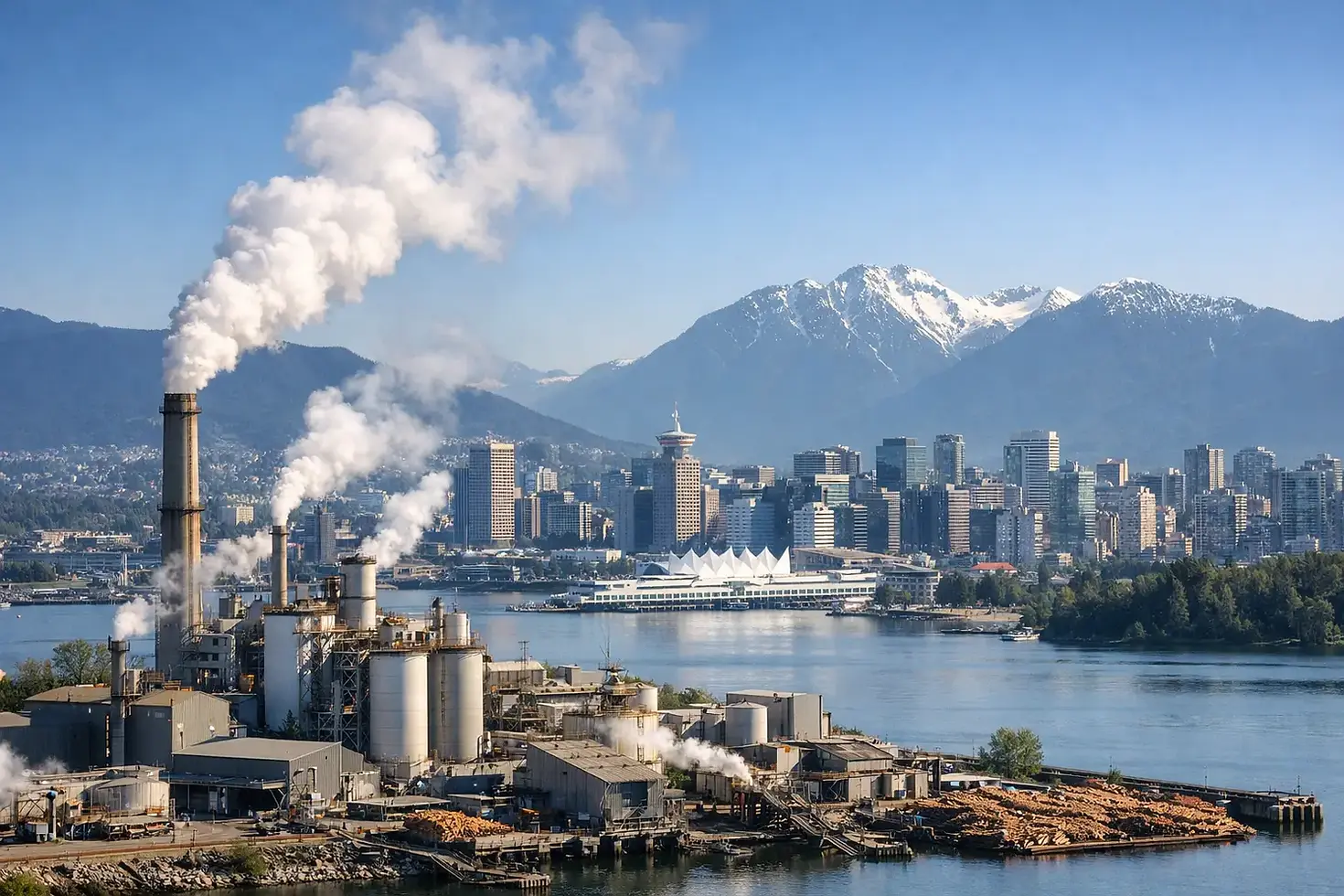
Metro Vancouver Air Permits for Industrial Facilities
- kevin0142
- 4 days ago
- 4 min read
A permit application can be delayed long before it reaches formal review. The usual causes are incomplete equipment details, emissions estimates that cannot be traced to operating assumptions, and missing baseline data. For facilities pursuing Metro Vancouver Air Permits, the strongest applications begin with a defensible technical record, not a form submission.
Metro Vancouver regulates emissions from industrial and commercial sources through its Air Quality Management Bylaw. Depending on the activity and equipment involved, a facility may require an air emissions permit, an approval, or an amendment to an existing authorization. The applicable pathway depends on the source, contaminant profile, operating capacity, location, and whether a proposed change could alter authorized emissions.
When Metro Vancouver Air Permits May Apply
A permit review should be considered early when a facility plans to install, replace, expand, or materially modify emissions-producing equipment. Common examples include boilers, heaters, engines, thermal oxidizers, process vents, dust collectors, paint or coating operations, material handling systems, and combustion equipment.
The key issue is not simply whether equipment has a stack. Regulators assess what is emitted, how much may be emitted, how the source will operate, and whether emissions controls are appropriate for the proposed activity. A replacement unit with a higher firing rate, changed fuel supply, increased production throughput, or revised exhaust configuration may require regulatory review even when it appears operationally similar to existing equipment.
A permit is generally an operating authorization with enforceable conditions. An approval may apply to construction, installation, or a specific change before the facility begins operating under the new configuration. Existing authorization holders should also review conditions before changing fuels, increasing hours, bypassing controls, or modifying ducts and stacks. These changes can affect compliance obligations and the validity of previous emissions assessments.
Build the Application Around Defensible Emissions Data
An air permit application is an engineering and compliance document. It should clearly identify every relevant emission source, associated control device, exhaust point, operating schedule, fuel or material input, and expected production rate. Vague descriptions create uncertainty during review and make it difficult to establish practical permit conditions.
Emissions estimates must be tied to stated assumptions. For combustion sources, this may include fuel composition, heating value, firing rate, excess oxygen, load profile, and control technology. For process sources, the assessment may require material throughput, volatile content, capture efficiency, destruction efficiency, particulate characteristics, and upset or startup conditions.
Published emission factors can be useful at the screening stage, but they are not always sufficient for a complex or variable process. Source testing, continuous analyzer data, vendor specifications, mass balance calculations, and process records may provide a more representative basis. The appropriate approach depends on the source and on the quality of available data. A conservative estimate is not automatically a defensible estimate if the operating assumptions are unsupported.
Stack Testing Can Reduce Uncertainty
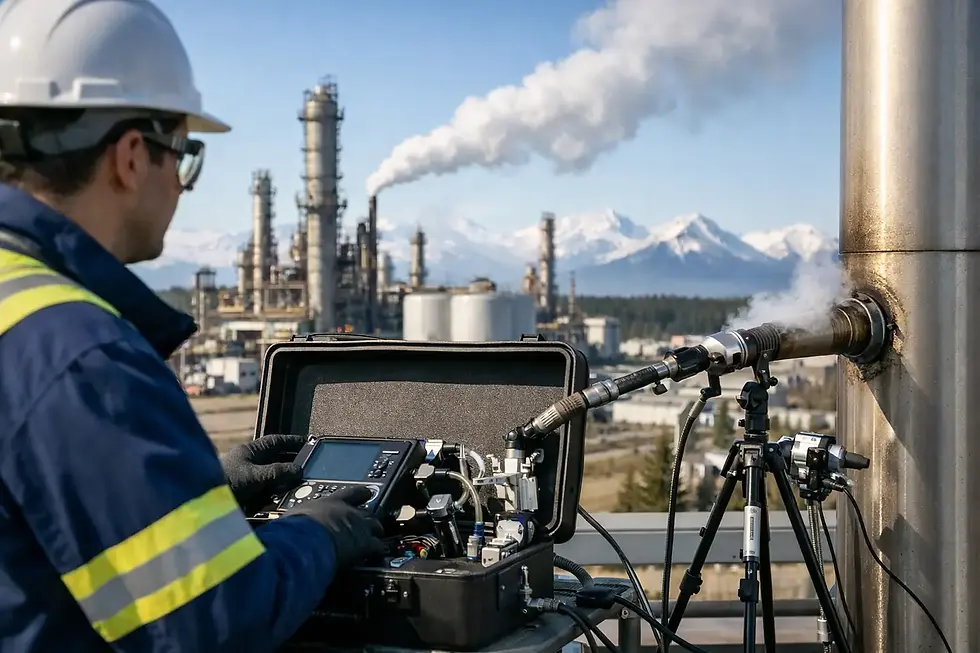
Representative stack testing is often the most direct way to establish actual emissions from an operating source. A well-designed program defines the sampling location, test method, number of runs, operating load, fuel or process conditions, quality assurance requirements, and reporting format before field work begins.
For example, testing may characterize nitrogen oxides, sulfur dioxide, carbon monoxide, oxygen, particulate matter, volatile organic compounds, hydrogen chloride, metals, or other source-specific pollutants. The selected methods must match the contaminant, stack conditions, expected concentration range, and regulatory purpose. EPA reference methods are commonly used for industrial source testing, but the final test plan should be aligned with the permit, regulator expectations, and site-specific safety requirements.
Testing during nonrepresentative conditions can create more questions than answers. A boiler tested at reduced load, an engine operating outside its normal duty cycle, or a process line sampled during an atypical production run may not demonstrate compliant performance. Facilities should document operating conditions throughout testing so the final report can support both permitting and future compliance decisions.
Plan for More Than the Initial Submission
Permit conditions often extend beyond an emissions limit. They may address maximum operating capacity, fuel restrictions, control equipment maintenance, stack configuration, monitoring, recordkeeping, notification requirements, and periodic source testing. The facility must be able to comply with each condition in day-to-day operations, including during maintenance and changing production demand.
This is where environmental, operations, maintenance, and engineering teams need to work from the same information. A condition that is technically achievable but not communicated to operators can become a recurring compliance risk. Similarly, equipment changes made during a shutdown may affect permit assumptions if they are not screened before installation.
A practical permit strategy also considers related reporting obligations. Changes in production, fuel use, or emissions may affect National Pollutant Release Inventory reporting, greenhouse gas inventories, combustion-source obligations, or internal environmental performance targets. Using consistent source data across permit applications, testing reports, and annual reporting reduces avoidable discrepancies.
A Disciplined Path to Permit Readiness
Before submitting a Metro Vancouver permit or approval application, confirm the equipment inventory, process description, control-device information, stack parameters, and operating scenarios. Then determine whether existing emissions data are representative or whether targeted testing is needed to establish a reliable baseline.
Air Research Group supports industrial facilities with emissions measurement, source characterization, permitting support, and compliance documentation that can withstand technical review. The most useful next step is usually a focused gap assessment: identify what the regulator needs, what the facility can substantiate today, and what testing or engineering work is required before a change becomes an avoidable compliance issue.

Comments