

Alberta Asphalt Plant Emissions Testing Requirements
- kevin0142
- 3 days ago
- 3 min read
Asphalt production can be operationally demanding long before a regulator requests a report. Dryer performance, fuel changes, recycled asphalt pavement content, baghouse condition, and production rate can all affect measured emissions. Alberta Asphalt Plant Emissions Testing provides the defensible data needed to demonstrate compliance, investigate performance concerns, and support decisions that affect plant uptime.
For most facilities, the testing program should begin with the site-specific operating approval and any applicable federal or provincial reporting obligations. A meaningful test is not simply a day of sampling. It is a planned measurement event that documents representative operation, applies appropriate reference methods, maintains a defensible quality system, and produces results that can withstand regulatory review.
What Drives Asphalt Plant Emissions Testing in Alberta
Testing requirements are commonly established through an Environmental Protection and Enhancement Act approval, approval amendments, emissions limits, complaint response requirements, or permitting work associated with a new or modified source. The approval conditions control. They may identify the required contaminants, test frequency, operating conditions, notification requirements, reporting format, and acceptable methods.
At an asphalt plant, the primary combustion and particulate source is often the aggregate dryer or burner exhaust, typically routed through a baghouse or another control device. Depending on the facility configuration, testing may address particulate matter, opacity, nitrogen oxides, sulfur dioxide, carbon monoxide, oxygen, carbon dioxide, total hydrocarbons, or volatile organic compounds. Blue smoke and hydrocarbon emissions may also require attention where liquid asphalt handling, loadout, or recycled asphalt pavement processing creates potential emission points.
The correct pollutant list is not identical for every facility. Fuel type, burner design, production capacity, control equipment, reclaimed asphalt use, and approval conditions all matter. Testing a parameter that is not required may add cost without improving compliance. Failing to test a required parameter, or using an unsuitable method, creates a more serious risk.
Building a Defensible Testing Plan
A sound Alberta asphalt plant emissions testing program starts before the field crew arrives. The facility and testing team should confirm the emission units, sampling locations, accessible ports, stack dimensions, safe work requirements, expected production schedule, fuel used during the test, and operating parameters to be recorded.
Representative operating conditions are particularly important. A plant tested while warming up, operating well below normal production, or experiencing unstable burner conditions may not produce data that reflects routine operations. When an approval specifies a production rate or operating range, the plant should plan to meet that condition throughout the required test runs. If weather, material availability, equipment issues, or safety conditions prevent representative operation, the issue should be documented and assessed before proceeding.
Method selection must align with the contaminant and source. Common examples can include EPA Method 5 for filterable particulate matter, Method 9 for visible emissions observations, Method 7E for nitrogen oxides, Method 10 for carbon monoxide, Method 6C for sulfur dioxide, Method 3A for oxygen and carbon dioxide, and Method 25A for total gaseous organic concentrations. The applicable approval, regulatory direction, and project objectives determine whether these methods are appropriate.
Field Execution Is a Safety and Quality Issue
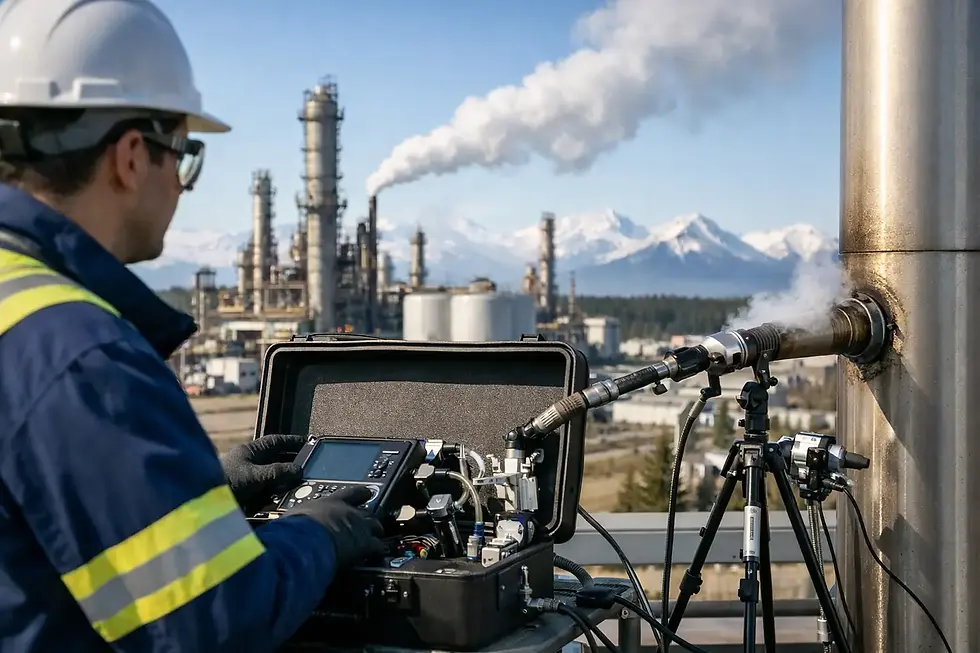
Asphalt plants present real field hazards: elevated platforms, hot ductwork, rotating equipment, vehicle traffic, combustible fuels, and changing weather conditions. Safe access is not separate from data quality. Sampling locations must be accessible and suitable for the selected method, and field work must be coordinated with plant operations so that sampling does not introduce risk or disrupt critical production activities.
Quality control also begins in the field. Calibrated analyzers, leak checks, zero and span checks, correct sample handling, documented chain of custody where applicable, and complete field logs support reliable results. Facility operators should retain operating records during each run, including production rate, fuel consumption, burner settings, baghouse pressure drop, temperatures, and relevant control-device information. These records help explain the results and demonstrate that the source was operating as intended.
Using Results Beyond a Pass or Fail Finding
A final report should clearly identify the source tested, methods used, sampling duration, operating conditions, calculations, quality-control outcomes, and comparison to the applicable limit. Results should not be viewed only as a compliance score. They can reveal whether combustion is well tuned, whether a baghouse may need attention, or whether process changes are affecting the emissions profile.
For example, elevated carbon monoxide can indicate incomplete combustion, while particulate results should be reviewed alongside baghouse operating data and visible emissions observations. A result close to an approval limit may warrant a proactive review of maintenance practices, burner tuning, fuel quality, or operating controls before the next required test.
Air Research Group supports industrial facilities with certified field execution, emissions measurement, and compliance-focused reporting. For asphalt plant operators, the practical objective is clear: plan testing around the approval, operate representatively, document thoroughly, and use the resulting data to maintain reliable production and regulatory confidence.

Comments