
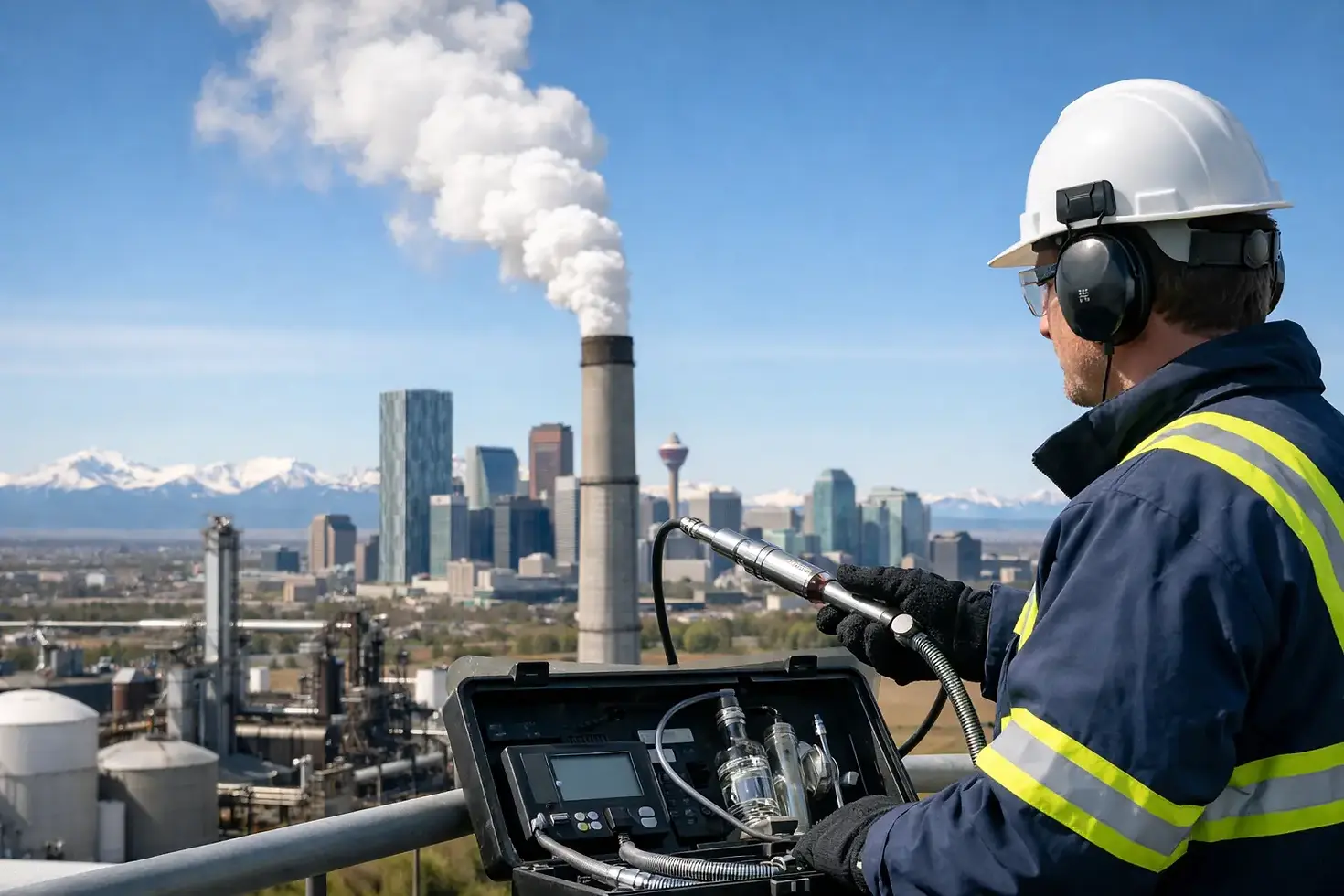
Stack Emission Testing for Calgary Alberta Facilities
- kevin0142
- 7 minutes ago
- 4 min read
A stack test is not simply a sample collected at the top of a stack. It is a controlled measurement event that must stand up to permit conditions, regulatory review, and internal operating decisions. For organizations responsible for Stack Emission Testing for Calgary Alberta Facilities, the quality of the result depends on preparation, representative operating conditions, validated methods, and complete quality assurance documentation.
A missed test window or an invalid run can create more than a scheduling problem. It can delay reporting, complicate approval renewals, require retesting, and leave an environmental manager without defensible data when it is needed most.
What Stack Emission Testing Must Demonstrate
Stack emission testing measures pollutants discharged from a defined source, such as a boiler, heater, engine, kiln, process vent, or combustion unit. The required parameters are determined by the facility's approval, federal or provincial reporting obligations, equipment type, fuel, process chemistry, and applicable emissions limits.
Depending on the source, a program may measure nitrogen oxides, sulfur dioxide, carbon monoxide, particulate matter, volatile organic compounds, hydrogen chloride, metals, ammonia, carbon dioxide, methane, nitrous oxide, or other compounds. Flue gas characterization may also require oxygen, carbon dioxide, moisture, gas velocity, molecular weight, temperature, and volumetric flow. These supporting measurements are not administrative details. They are often necessary to convert concentration data into the corrected or mass-based emission rates required by a permit or reporting program.
A valid test program also establishes whether the source was operating representatively. Testing a boiler at low load when the approval requires normal maximum operating conditions, for example, may not demonstrate compliance even if measured concentrations appear favorable.
Planning Stack Emission Testing for Calgary Facilities
The strongest testing programs begin well before the field crew arrives. The first step is to review the governing requirement and translate it into a practical test plan. This includes confirming the emissions limits, averaging periods, number of runs, required operating load, reference method, reporting format, and deadline.
Method selection matters. EPA reference methods are commonly used for source testing, but the correct method must match the pollutant, stack configuration, expected concentration range, and regulatory requirement. Particulate testing may require isokinetic sampling and a carefully verified nozzle selection. Gas-phase measurements may involve extractive analyzers, instrumental methods, or integrated sampling trains. A method that is technically capable of measuring a compound is not automatically the method required for compliance.
Facility readiness should be addressed during pre-test planning. Safe access to sampling ports, adequate working platforms, power availability, port dimensions, stack drawings, and process operating records all affect field execution. Calgary-area weather can also influence mobilization, equipment protection, access, and sampling logistics, particularly during cold-weather work. These conditions should be managed in the project plan rather than treated as last-minute field issues.
Field Execution: Accuracy Depends on Control
During testing, the facility and testing team must maintain the planned operating scenario. Fuel use, production rate, control-device status, burner configuration, process temperatures, and equipment load should be documented throughout each run. If operating conditions change materially, the team must assess whether the data remain representative and whether a run should be repeated.
Quality control is built into the measurement process. Depending on the method, it can include analyzer calibration checks, system bias checks, leak checks, sampling train verification, traverse-point calculations, temperature and pressure readings, and post-test recovery procedures. Calibration gases and field instruments must be traceable and within their required calibration periods.
For particulate and other extractive methods, sample recovery and laboratory handling are equally significant. Filters, impingers, rinses, blanks, chain-of-custody records, and analytical detection limits can all affect the final reported result. A low measured value is only useful if the associated quality assurance records demonstrate that the method was executed correctly.
Defensible Reporting Supports Compliance Decisions
The final report should do more than present a table of concentrations. It should clearly identify the emission source, test dates, operating conditions, methods used, sampling locations, run durations, calculations, quality control results, and any deviations from the approved plan. Where applicable, results should be presented in the units and correction basis specified by the approval, such as dry standard conditions, reference oxygen, mass emission rate, or production-based intensity.
This documentation supports several connected compliance obligations. Stack test results may inform air approval compliance, National Pollutant Release Inventory reporting, greenhouse gas inventories, Multi-Sector Air Pollutants Regulations requirements, emissions inventories, and internal environmental performance reviews. Not every facility is subject to every program, but the same source data often informs more than one reporting decision.
A qualified technical review can also identify whether elevated results are tied to operating conditions, combustion performance, control equipment behavior, fuel changes, or sampling constraints. Testing is a measurement tool, not a substitute for root-cause analysis. However, reliable measurements give engineering and operations teams a sound basis for deciding what to investigate next.
When a Retest May Be Necessary
Retesting is sometimes required because of approval schedules, process changes, failed runs, nonrepresentative operating conditions, or regulator direction. It may also be prudent after a major equipment modification, a control-device upgrade, a fuel transition, or a sustained shift in production capacity.
The most effective approach is to treat each test as part of an ongoing emissions management program. Maintaining current source information, calibration records, prior test reports, operating data, and reporting calendars reduces preventable delays when the next compliance deadline approaches.


Comments