
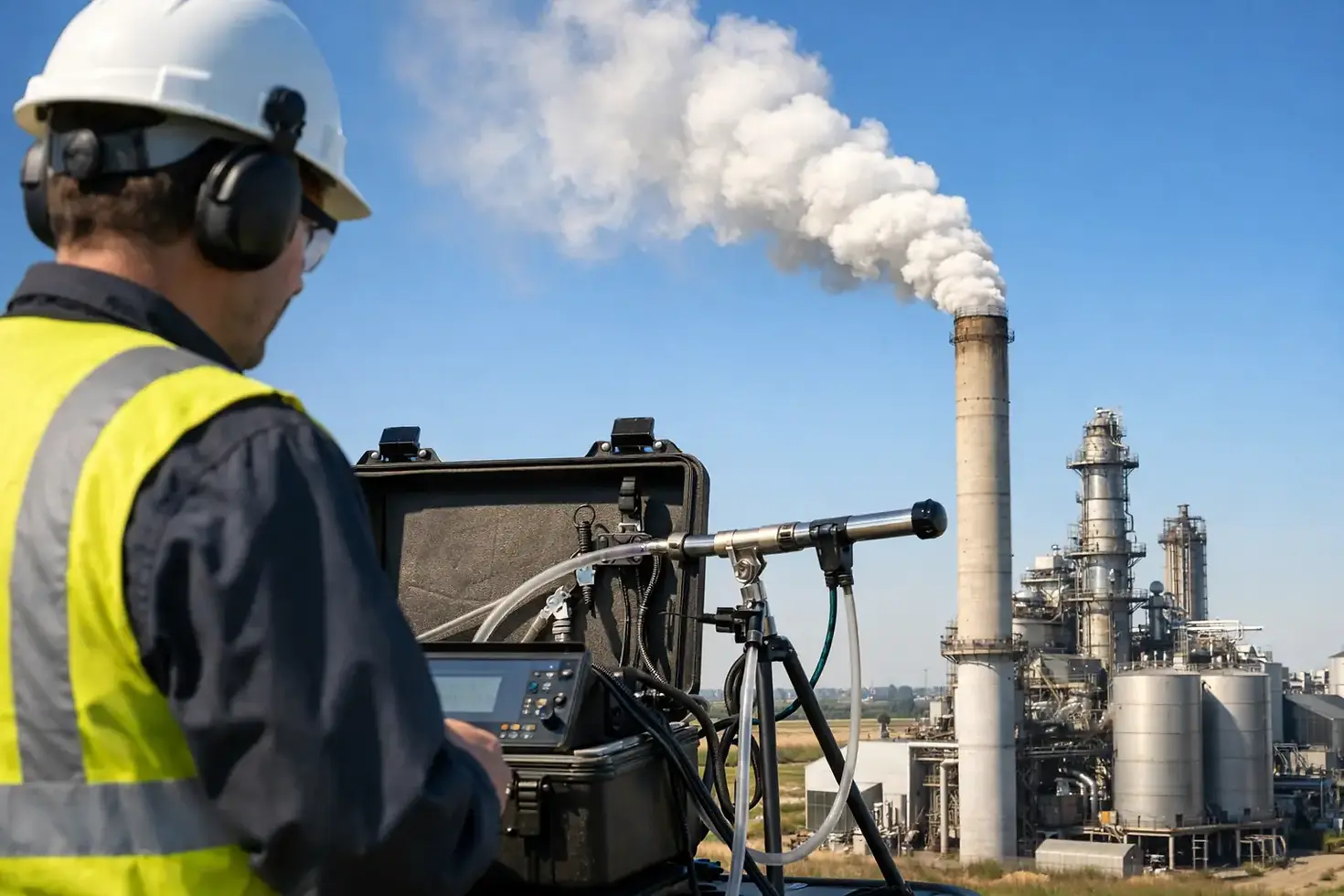
Stack Emission Testing for Saskatchewan Facilities
- kevin0142
- 2 days ago
- 4 min read
A missed test window, an unrepresentative load condition, or a poorly documented sampling train can turn a routine compliance obligation into a regulatory and operational problem. Stack Emission Testing for Saskatchewan Facilities must produce more than a reportable number. It must provide defensible emissions data that reflects actual operating conditions, supports permit obligations, and stands up to technical review.
For industrial facilities, stack testing is often connected to approval conditions, combustion performance, federal reporting programs, environmental investigations, and capital planning. The quality of the result depends on decisions made well before the field crew arrives.
Why stack testing requires site-specific planning
No two stacks, processes, or compliance requirements are identical. A boiler operating on natural gas presents a different test program than a cement process, reciprocating engine, thermal oxidizer, refinery heater, or manufacturing exhaust system. Pollutants of concern, sampling locations, gas stream characteristics, production schedules, and applicable methods all affect the scope.
A technically sound plan begins by confirming the regulatory driver. This may include Saskatchewan facility approval conditions, federal Multi-Sector Air Pollutants Regulations requirements, National Pollutant Release Inventory reporting, greenhouse gas quantification, or an internal emissions-performance objective. The selected test methods, detection limits, averaging periods, and operating conditions should match that driver.
Testing under atypical conditions can be a costly mistake. If production is reduced, pollution-control equipment is bypassed, fuel quality has changed, or a process is unstable, results may not represent the condition required by the permit or reporting program. Plant operations and the testing team should agree in advance on the target load, operating data to record, and circumstances that would require a test run to be repeated or rescheduled.
A reliable stack testing program starts before mobilization
Pre-test coordination protects both data quality and site safety. The testing team needs current process information, stack drawings, access details, previous emissions reports, equipment specifications, and relevant approval limits. This review identifies whether the existing test ports and platforms can support the required sampling method.
For many source tests, the sampling location is as important as the analyzer or sampling train. Inadequate straight-run distance, poor access, leakage around ports, stratified flow, or unsafe platform conditions can affect method compliance and introduce uncertainty. These issues do not always prevent testing, but they must be evaluated, documented, and addressed through an appropriate technical approach.
A disciplined pre-test plan should also establish communication between operations, maintenance, EHS personnel, and the field crew. The team should confirm site orientation requirements, lockout and isolation procedures, fall-protection expectations, weather contingencies, crane or lift access, and the process data that will be collected during each run. This coordination reduces avoidable delays and helps maintain consistent operating conditions.
Methods, measurements, and defensible data
Stack emission testing commonly involves reference methods for velocity and flow, moisture, oxygen and carbon dioxide, particulate matter, nitrogen oxides, sulfur dioxide, carbon monoxide, volatile organic compounds, metals, acid gases, or other regulated parameters. The required approach depends on the source, pollutant, approval condition, and reporting purpose.
Certified execution means more than placing an instrument at a stack port. Field teams must verify calibration status, conduct required leak checks and quality-control activities, document sample recovery, record process conditions, and maintain a clear chain of custody when laboratory analysis is required. Calibration gases, sample trains, analyzers, and laboratory procedures must be suitable for the intended method and expected concentration range.
Continuous emissions monitoring systems and portable analyzers can provide valuable operational information, but they do not automatically replace a compliance source test. A facility may need both: continuous data for day-to-day control and periodic reference-method testing to demonstrate compliance, validate assumptions, or support emissions calculations.
Turning test results into compliance decisions
The final report should allow an environmental manager, engineer, or regulator to understand what was tested, how it was tested, how the process was operating, and how the results compare with applicable limits. A useful report clearly identifies test dates, run times, operating rates, fuels, control-device status, sampling methods, quality-control results, calculations, and any deviations or limitations.
Results also need context. An exceedance may indicate a control-equipment issue, a fuel or feedstock change, combustion imbalance, process upset, or an emissions limit that requires further interpretation. Conversely, a compliant result at one operating condition does not prove performance across the full operating range. Trend review and repeat testing may be appropriate when facilities are making production changes, modifying equipment, or approaching reporting thresholds.
For Saskatchewan facilities with multiple reporting obligations, one well-planned test campaign can support several decisions. The same validated data may inform permit compliance, NPRI calculations, greenhouse gas inventories, equipment optimization, and future air-permitting work. That value is realized only when the sampling scope and documentation are designed for those uses from the outset.
When to plan the next test
Do not wait until a deadline is close to confirm stack access, method requirements, laboratory capacity, or operating availability. Testing programs are most effective when they are scheduled around facility operations and treated as part of ongoing compliance management rather than a one-time field event.
The strongest emissions program is built on representative operating conditions, method-compliant measurement, complete documentation, and prompt technical follow-up when the data identifies a concern.


Comments